
TL: DR;
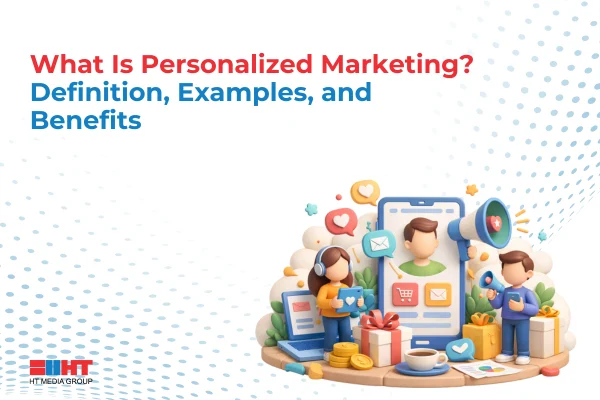
This blog is written for marketers, business owners, media professionals, and brands who want to understand how personalized marketing works and how to use it responsibly to improve customer engagement and growth.
- Personalized Marketing Explained Simply: Personalized marketing uses customer data, behavior, and preferences to deliver relevant messages, offers, and experiences instead of generic advertising.
- Real-World Benefits Across Industries: From e-commerce and media to banking and travel, personalization improves engagement, loyalty, ROI, and overall customer experience.
- Trust, Privacy, and Responsible Use Matter: Successful personalization depends on ethical data use, transparency, and robust privacy practices, especially in diverse markets such as India.
One-to-one marketing has ceased to be a nice-to-have tactic and has become a growth strategy for modern brands. Consumers want businesses to understand their preferences and recommend suitable products, and to communicate at the right time through the right channels and devices.
Personalization is transforming the relationship between businesses and their customers, whether through curated news feeds and customized email offers, location-based promotions.
In this guide, we will define personalized marketing, explain how it operates, identify real-world examples, outline the advantages for both brands and consumers, and explain why trusted media brands are best suited to support data-driven, responsible personalization.
What Is Personalized Marketing? A Simple Definition
A personalized marketing strategy involves the use of customer data, behavior, and preferences to send customized messages, offers, and experiences to particular users or specified groups of users.
Brands personalize the same campaign, as opposed to sending it to all people:
- Content and headlines
- Product recommendations
- Offers and pricing
- Timing and channels
- Location-specific messaging
For example, an online store may display winter jackets to customers in cold regions and market summer clothing to customers in warmer regions. A news source can feature an issue according to what a reader constantly clicks or looks up.
At its core, personalized marketing aims to ensure that each interaction is relevant, timely, and useful.
How Personalized Marketing Differs from Traditional Advertising
Conventional marketing is based on generalized messages that aim at reaching large numbers of people. TV and newspaper advertisements, and mass email campaigns, generally assume a single creative idea applicable to all.
Individual marketing reverses this concept by targeting:
- Customer-centric data as opposed to demographics.
- Interactive advertising, as opposed to fixed advertisements.
- Personal experiences rather than sloping assembly lines.
- Live feedback to user activity.
In traditional advertising, the question is: What do we want to say? In personalized marketing, it is: What does this customer need now?
Key Elements of an Effective Personalized Marketing Strategy
Successful personalization doesn’t happen by accident. It depends on a strong foundation built around people, processes, and technology.
Customer Data and Insights
Brands typically use first-party data such as website behavior, app usage, subscriptions, purchase history, and newsletter interactions. This information helps create meaningful audience profiles.
Segmentation and Micro-Segmentation
Instead of grouping users broadly, companies create smaller segments based on interests, location, intent, or lifecycle stage.
Omnichannel Delivery
Personalized experiences should feel consistent across email, websites, apps, push notifications, ads, and in-store touchpoints.
Automation and Decision Engines
Marketing automation platforms ensure messages are triggered at the right time like a reminder after cart abandonment or a recommendation after reading a related article.
Testing and Optimization
Continuous experimentation helps refine messaging and improve performance over time.
Real-World Personalized Marketing Examples Across Industries
Personalization looks different across sectors, but the goal remains the same: relevance.
E-commerce and Retail
- Browsing history recommendation of products.
- Personalized homepages
- Repeat buyers are provided with loyalty.
Media and Publishing
- Personalized news feeds.
- Topics of newsletters chosen on the interests of subscribers.
- Local issues with local stories.
Banking and Fintech
- Customized financial tips
- Notifications based on expenditure habits.
- Advertise relevant products, such as travel cards or loans.
Travel and Hospitality
- Location-based deals
- Recommendations for trips according to previous bookings.
- Personalized itineraries
India-Focused Personalization
In diverse markets like India, brands increasingly adapt campaigns by language, region, festivals, and mobile usage patterns making localized personalization a powerful growth lever.
Benefits of Personalized Marketing for Brands and Consumers
When done well, personalization creates value for both parties.
Higher Engagement and Conversion Rates
Relevant content naturally attracts more clicks, opens, and purchases.
Stronger Customer Loyalty
People are more likely to return to brands that understand their preferences and save them time.
Better Marketing ROI
Budgets go further when ads and content reach users who are already interested.
Improved Customer Experience
Personalization reduces friction, making journeys smoother and more intuitive.
Increased Trust and Brand Affinity
Respectful, transparent personalization strengthens long-term relationships.
Personalized Marketing in India: Why It Matters in a Diverse Market
India’s digital population is large, multilingual, and mobile-first. The key to overcoming this complexity is personalization.
Brands are customizing experiences more by:
- Local languages and dialects.
- Local news and city-specific offers.
- Festival-driven campaigns
- Tier-2 and Tier-3 city targeting
- Mobile optimized content formats.
This is a local strategy that will ensure marketing messages are culturally and contextually relevant, rather than generic or imported.
Challenges and Risks in Personalized Marketing to Watch Out For
Despite its benefits, personalized marketing comes with responsibilities.
Data Privacy and Compliance
Brands are expected to comply with applicable laws and provide explicit consent, transparency, and secure data storage.
Over-Personalization
An excessive level of targeting can be intrusive when users are not informed how their data is used.
Data Silos
Shrinkage of systems does not provide a single view of the customer.
Bias in Algorithms
The use of AI models should be reviewed to prevent the promotion of biased assumptions.
Trust and Transparency
Honesty on data use is assisted by clear communication.
How HT Media Supports Responsible, Scalable Personalized Marketing
As one of India’s strongest media conglomerates, We are at the intersection of credible journalism, a large following, and data-driven advertising systems.
Being a company that possesses strong first-party data capabilities on our online platforms and publications, At HT media we help to assist brands in:
- Access audiences with background data.
- Offer region-based campaigns and interest-based campaigns.
- Bring the finest environments to promote brand safety.
- Build believable long-term relationships by telling stories.
- Personalization should be applied effectively when modifying privacy.
Audience intelligence and editorial integrity will help and enable advertisers to exceed mass targeting and achieve meaningful, customized engagement at scale.
How to Get Started With Personalized Marketing: A Practical Checklist
To those organizations that are embarking on the personalization process, the most appropriate approach is incremental:
- Established goals, conversion, retention, or awareness.
- Sources of audit information: CRM, web analytics, application data, subscriptions.
- Choose the correct tools: CDPs, automation platforms, and analytics systems.
- Start simple – simple guidelines or newsletters by segment.
- Test and test A/B test creatives, timing, and offers.
- Measure results – track KPIs, including CTR, CL,V and revenue growth.
- Act responsibly – concentrate on privacy and transparency.
Conclusion: Why Personalized Marketing Is No Longer Optional
One-on-one marketing has become an integral part of effective online marketing. Brands can enhance their relationships, performance, and presence in competitive markets by tailoring content, timing, and channels to the needs of each individual.
Since it is used hand in hand with reputable publishing partners at HT Media and supported by ethical data practices, personalization changes marketing from less of an interruption and more of an interaction that leads to value-generating activities of businesses and their audiences.
Frequently Asked Questions
What is an example of personalized marketing?
A personalized marketing example is an online store that shows you recommendations based on your previous shopping or browsing history. For example, Netflix recommends movies based on what you watch. This makes the experience more relevant and engaging.
What is personalized marketing?
Personalized marketing is a technique in which a business uses customer data to deliver tailored messages, offers, and experiences. It does not use generic advertising but focuses on individual tastes and actions. This enhances customer interaction and customer conversion.
What are the 4 P strategies?
The 4 P strategies include Product, Price, Place, and Promotion. They determine the way a business packages, sells, and markets its products. Both are pillars of marketing strategy.
What is the 3-3-3 rule in marketing?
The 3-3-3 rule states that a message must be recalled within 3 seconds, supported by 3 main advantages, and elicit 3 potential behaviours. It helps develop unambiguous, straightforward, and efficient marketing communications.
What is the 70-20-10 rule in marketing?
The 70-20-10 rule implies that you should spend 70 percent of your budget on what has been proven to be working, 20 percent on new or developing channels, and 10 percent on potential experiments. This is a compromise between stability and innovation.
Ready to take your brand to the next level? Connect with us today to explore how HT Media can amplify your presence across our diverse portfolio of 25+ brands and properties. Let's turn your brand vision into reality!


Comment